
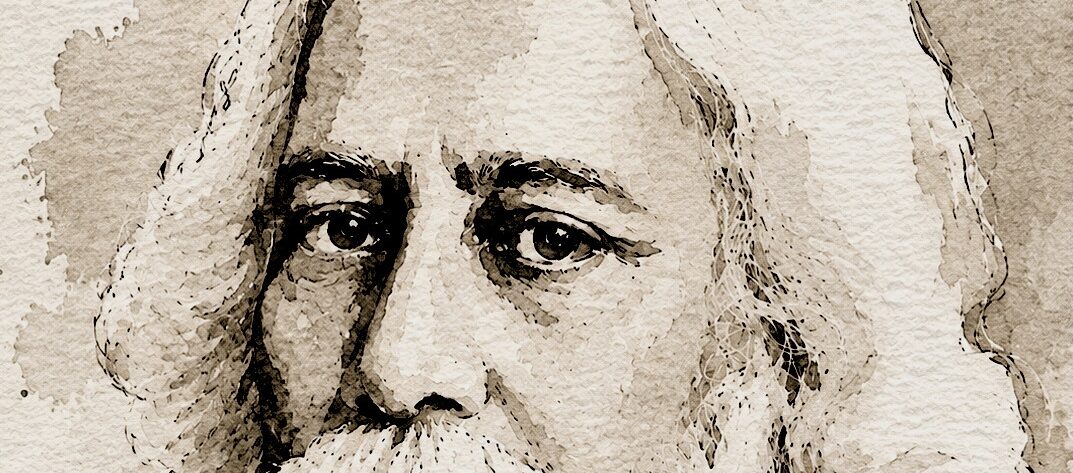
If Tagore’s song is capable of great reverence for his beloved country, whose skies and people are the music of his soul, and of the surrender shown in the Gitanjali, his critical lens is much more grounded in the protest politics of his time. As a social reformer, Tagore held a clear vision for his rapidly changing colonial India, and it was modern, open towards the world—yet rooted in the humanistic values of his spiritual background. It is his focused lens—when turned on our Western culture—that illuminates its ability to organize and order the world while revealing the ways in which its materialism has made so desolate life upon it.
Musical Selection for this Podcast
- “Tumi Robe Nirobe” by Shubhayu Sen Majumdar; composed by Rabindranath Tagore
- “Aji Bijan Ghore” by Tejendra Majumdar; composed by Rabindranath Tagore
- “River Flows In You” by Yiruma and Lee Ru-ma
- “Sukhdev Violin Meditation” by Manu Om and Sukhdev Prasad Mishra.
- “Bhenge Mor Ghorer Chaabi” by Purbayan Chatterjee; Rabindra Sangeet, and S. Jaykumar
- “Jogiya” by Hariprasad Chaurasia; composed by Dilip Rawal; lyrics by Parth Bharat Thakkar
- “Lahanpan Dega Deva” by Kumar Gandharva; composed by Vasant Desai, lyrics by Bal Kolhatkar
- “To a Wild Rose (MacDowell)” by Edward MacDowell
- “Unsaid” by Anoushka Shankar and Norah Jones
- “Brahmananda Swarupa” by Sadguru and the Sounds of Isha



My regret is that it took me so long to listen. My joy is in the intorduction to Tagore beyond a name in the books.
Thank you for the beautiful introduction to a thinker/poet/humanist I welcome into my life.
I especially enjoyed the music selected for this episode. Brilliant work, Maryama.